Advanced solar technologies meeting the challenges of grid decarbonization
"The NREL's 2035 net-zero study estimates solar will need to grow from 3% to 40% of U.S. generation - requiring 1 TW of new solar capacity in just 12 years."
Smart technology maximizes your energy production and savings
Track performance of each individual panel in real-time
Machine learning adjusts output based on weather forecasts
Get notified immediately if issues are detected
Seamlessly interact with utility grid for optimal savings
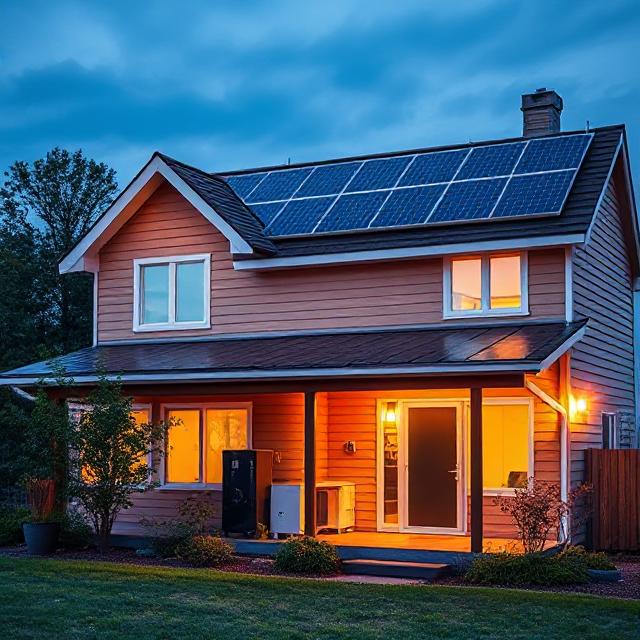
Advanced battery storage solutions allow solar energy to power your home day and night, reducing grid dependence by up to 90%.
Utility-scale solar requires ~5 acres/MW. Our high-density designs reduce footprint by 30% compared to industry average.
Advanced inverters with grid-forming capabilities maintain stability as renewable penetration increases.
Our Solar Stewardship Program ensures local benefits through job creation and revenue sharing models.
Passivated Emitter Rear Contact cells achieving 23.5% efficiency become industry standard, supported by IRA manufacturing credits.
Dual-sided modules with 30% bifacial gain capture 40% market share, crucial for meeting NREL's land-use projections.
Perovskite-silicon tandem cells surpassing 30% efficiency enable the final push to 1 TW solar capacity.
Explore how our solar solutions align with federal clean energy goals and local community needs.